





AI and IoT: Everything You Need to Know 

A (Re)introduction to AI and IoT

Intros may not be necessary—you’ve likely already met. Artificial intelligence (AI) and the Internet of Things (IoT) are increasingly infused into our lives. In fact, the better these technologies work together, the less likely we are to think about how they interact. When things work, they just work (thanks, UX design!).

Yet those interactions are more potent than ever. Transforming data and connectivity through the network, AI and IoT are fueling one another’s rapid growth. Together, they can unlock tremendous efficiency and innovation, but to safely harness their potential, it’s important to understand what AI and IoT can offer to organizations—and to one another.

What is artificial intelligence?

Applications of AI are advancing so rapidly that only the latest breakthroughs tend to capture our attention. Today, when someone mentions AI, it’s easy to think “generative AI”—but AI still encompasses a broad array of computer science and engineering that simulates a human’s capacity to learn, perceive, reason, and problem-solve. Using AI technologies effectively requires a deeper understanding of the distinctions between different types.

AI can be as simple as reactive machines that perform a narrow range of tasks. These basic systems follow predefined rules and patterns, but don’t learn from historical data or adapt. Early chatbots, for example, might offer a limited selection of responses, and only if the user phrased their question a certain way.

Machine learning (ML) systems, on the other hand, learn from historical data and are designed to improve over time. Using advanced algorithms, ML applications are skilled at optimizing. ML-powered recommendation engines are a key feature driving modern consumer interactions with digital content. This has led to greater personalization of user experiences across e-commerce sites, streaming platforms, and workplace dashboards.

Deep learning is a characteristic of more advanced AI systems that use inference and neural networks to analyze complex data and develop sophisticated processing models. The emergence of large language models (LLMs) such as ChatGPT have shown deep learning’s transformative potential, enabling AI integration into diverse applications such as intelligent chatbots, financial trend analysis, and code debugging.

More sophisticated forms of AI often require more data. Large datasets help to ensure accurate parameters are set in complex models, contribute to a stable training process, and enable advanced AI to learn underlying patterns and capture nuanced features.

What is the Internet of Things?

The Internet of Things refers to a network of objects, such as devices, buildings, and vehicles. IoT connectivity is enabled by sensors, software, and technologies that allow these objects to collect and share data with one another using the internet. IoT sensors can also trigger transactions in response to the real-world data collected, such as climate or visual information. The process used to intercept and log traffic that passes over a digital network is referred to as packet capture. Data packets that are captured can then be analyzed to provide detailed insights and help diagnose network issues.

The decisions that an IoT system makes are determined in a control loop. Though similar to a reactive machine in the narrowness of its focus, an IoT control loop is a complex combination of hardware and software. Control loops leverage sensors, data processing units, actuators, and communication networks to manage things like temperature or lighting in complex environments. While not a form of AI, control loops can enable data-driven automation.

The potent intersection of AI and IoT

IoT technology is widely used to optimize energy usage, maintenance, and security in various settings. These include everything from smart factories and homes to traffic lights and hospitals. Different IoT devices and platforms communicate through application programming interfaces (APIs), which integrate data from multiple devices into centralized systems. APIs can also help manage the increased data load as more devices are added, allowing the network to scale efficiently.

There are several challenges in managing these interconnected devices, such as limited visibility for end users and complex network integrity. IoT devices generate massive amounts of data. While copious data is key for sophisticated AI models, it can become overwhelming to process—making network performance issues difficult to diagnose.

The network of devices also can become a vulnerable entry point for cyberattacks. As networks add complexity, attack surfaces proliferate. According to the 2024 State of Industrial Networking Report, mitigating against cyberthreats is the #1 challenge for companies running industrial infrastructure.

The combination of AI and IoT is helping to address some of the challenges in managing more complex networks. It’s also improving how devices interact and make decisions. Smart spaces and AI-enhanced data management systems are helping organizations digitally transform physical workspaces, gain control over environments, avoid costly disruptions, and protect individuals who access those spaces. Intelligent simulations are accelerating this transformation, compressing design cycles by applying AI algorithms to extract more insights from fewer simulations.

What are the benefits of combining AI and IoT?

AI helps to significantly simplify IoT network management and performance assurance. For instance, AI-driven channel planning uses advanced algorithms to monitor network conditions, tag severities, and avoid dynamic frequency selection (DFS) events that require frequency switching to prevent interference. AI can also help ensure compliance with local energy regulations by adapting transmission power based on range data and regulatory requirements.

AI also democratizes the power of IoT, allowing for more intuitive system interactions that use conversational prompts instead of highly technical queries. This allows administrators to quickly trigger packet captures, automate monitoring processes, and detect anomalies using preconfigured data from other deployments.

Used together, AI and IoT also enable simulations of environments to test virtual scenarios and optimize configurations. IoT systems can leverage the deep learning ability of AI to analyze vast amounts of data and predict outcomes, making those ecosystems and the components within them more adaptive and intelligent.

For example, smart cameras equipped with AI can analyze video feeds in real time, trained on models that allow them to detect and recognize anomalies, unusual activities, potential shortages, or even security threats. Surveillance systems that once required manual oversight and, in the case of incidents, laborious manual review of footage, are now transformed into proactive security solutions that can respond instantly. Triggers can even be set up to only activate threat response in anomalous conditions, such as when an RFID-tagged device leaves a designated area in a store.

The advanced analytics and machine learning capabilities of AI can be applied to data collected by these systems, offering nuanced insights that can improve interactions, refine resource allocation, and extend device life. Retailers can use AI and IoT cameras to track buyer sentiment through facial expressions and traffic patterns. Dwell time can be tracked using heat maps to inform improved equipment configurations and proper rotation.

The APIs that allow IoT devices to communicate with one another also facilitate custom AI solutions for IoT edge applications. AI that operates at the edge can be trained on highly relevant, real-time information, allowing it to quickly diagnose issues and pinpoint causes such as power outages, local environmental factors, connectivity problems, or user errors with a high accuracy and speed. By computing smart thresholds, AI reduces alert fatigue, providing more specific analysis and ensuring that resources are not wasted on misdiagnoses.

AI-enhanced radio resource management (RRM) can process and analyze 10 times the data of conventional methods—another boon for performance assurance. Optimizing radio configurations across multiple access points, RRM systems can help minimize or quickly resolve connectivity issues in complex wireless environments where any amount of latency can significantly impact the user experience.

Securing IoT and AI-based applications

Enhancing the security and performance of IoT networks with AI-based edge applications requires more agility and granular control over network traffic and device interactions than traditional virtual local area network (VLAN)-based approaches can offer. By dynamically adjusting security measures and resource allocation based on real-time data and contextual information, adaptive policy ensures that security protocols meet each device and application’s specific needs and behaviors.

By continuously monitoring network activity and device behavior, adaptive policies can identify anomalies and respond to threats with automatic segmentation and traffic isolation. Automating a segmented response minimizes the impact of security breaches and reduces the potential surface area for an attack.

Adaptive policies also help optimize resource allocation and performance by prioritizing critical applications, managing bandwidth efficiently, and dynamically adjusting to changing conditions and demands in the IoT ecosystem. This helps prevent bottlenecks and ensures that cameras, sensors, and other edge AI applications can function with low latency and high reliability.

What does the future of AI and IoT ecosystems look like? Less intrusive, for one thing. We’re already seeing the infrastructure efficiency in data centers being built to power AI computing. Informed by AI and IoT feedback and optimization, these new data centers require far less space than those of the past. As the use cases for smart and even autonomous IoT ecosystems abound, demand for elegant infrastructure could grow.

Whereas organizations once had separate systems to track people, inventory, and external threats, a platform environment is becoming more attainable than ever thanks to the integration of systems that AI and IoT are now making possible. As environments grow more personalized and complex, user controls should be simplified into a single dashboard experience that works so well you don’t even have to think about it.

Register for a free Meraki dashboard demo

The post AI and IoT: Everything You Need to Know  appeared first on The Meraki Blog.
Is Your Network Infrastructure Ready for More IoT Devices?

From Wi-Fi 6E (and the upcoming Wi-Fi 7 technologies) to smart cameras, IoT devices are expected to grow by 50% by 2027. As organizations leverage more of these intelligent, data-generating machines to boost employee productivity and user experience, they may want to consider the impact on the network.

The associated data influx of additional IoT devices could lead to network congestion and slow response times, affecting the performance and reliability of both the network and the IoT devices it supports. Moreover, IoT devices can be susceptible to cyberattacks. Is your network infrastructure ready to handle the expected IoT growth?

Imagine investing in interactive whiteboards to enhance employee collaborations, only to experience network congestion causing delays in sharing and saving content. This would lead to frustrated employees and upset clients.

Realizing IoT investment starts with a secure backbone

We recently expanded our Cisco Catalyst 9300-M switching portfolio with 15 new models designed to meet your most demanding use cases. It enables you to deliver a flexible and secure end-to-end network at scale while managing it with ease and confidence. Here are some features designed to unlock new use cases while lowering deployment and operational costs:

  • Secure networking across sites: extension of Adaptive Policy across all new platforms and capable of up to 1T physical stacking and stacking flexibility across models.
  • Smart, sustainable spaces: 90W Universal Power Over Ethernet (UPOE+), 1,900W power supply option, and StackPower.
  • Digital experiences and assurance: high-density mGig and fiber options and 25G/100G uplinks.

For more detailed information, please refer to the datasheet. Tune in to our latest Cisco Champion Radio episode and learn how these latest Catalyst 9300-M switches can help our customers solve the most challenging IT and security needs at scale.

Power more distributed, smarter, and sustainable spaces with UPOE+

The expansive corporate campuses of yesterday have given way to a new age of decentralized offices and hybrid work structures. A recent Cisco survey underlines this change, showing that 98% of meetings now involve at least one remote participant.

The new Catalyst 9300X-M 90W UPOE+ switching powerhouses can connect more power-hungry PoE devices securely to ensure application operations and frictionless user experiences, such as smart lighting systems, conferencing system, and smart cameras. The best part? All your Meraki devices across distributed locations can be managed centrally on the Meraki dashboard, unlocking dynamic topology and rich telemetry, enabling your team with a deeper understanding and control of the entire network for faster mean time to resolution and effective security management.

When converging network and power management, it reduces deployment and simplifies ongoing operations. PoE management on Meraki dashboard can also help you achieve sustainability goals.

For example, the Wrexham County Borough Council in the United Kingdom used Meraki sensors and Cisco Meraki switch port schedules to reimagine its IT infrastructure to reduce cost and carbon emissions across 70 schools. The council has been able to make significant energy savings of 10 metric tons of carbon and roughly $28,000 in electricity savings per year across its 70 schools.

Connect everyone and everything securely with streamlined security

The traditional VLAN-based security policy approach is insufficient, introducing skill gaps and challenges for your IT and security teams to maintain.

Adaptive Policy enables secure access to network resources by dynamically segmenting the network based on user identity and context. This approach reduces SecOps efforts and costs by eliminating the need for manual management of thousands of access control lists (ACLs) and re-architecting the network infrastructure when deploying policy changes.

It strengthens security by automatically applying appropriate policies to the correct users and devices. Back to the earlier example, it will ensure employees can access the interactive whiteboard without delays, while unauthorized devices such as smart cameras will not have access to business applications.

Simplify network operations with an agile, flexible platform

In a distributed IT landscape, Cisco Meraki provides a centralized end-to-end management experience, from wired and wireless, to security, to IoT. This comprehensive approach helps your team deliver secure network management at scale without a steep learning curve. Your network team can make configuration changes in one place and push to selected locations, eliminating manual processes and potential human errors.

Real-time application visibility and rich telemetry provide your network teams with proactive insights to optimize the network, ensuring a seamless employee experience. Furthermore, firmware updates are made effortless with Meraki. Simply schedule and stage them from the cloud, improving productivity for your team.

Resilient, secure networks start here

The Catalyst 9300-M switching portfolio, along with the scalable Adaptive Policy, can help you navigate this new influx of data and network requirements. For more information, please explore our page or contact our sales team.

The post Is Your Network Infrastructure Ready for More IoT Devices? appeared first on The Meraki Blog.

Is Your Network Infrastructure Ready for More IoT Devices?

From Wi-Fi 6E (and the upcoming Wi-Fi 7 technologies) to smart cameras, IoT devices are expected to grow by 50% by 2027. As organizations leverage more of these intelligent, data-generating machines to boost employee productivity and user experience, they may want to consider the impact on the network.

The associated data influx of additional IoT devices could lead to network congestion and slow response times, affecting the performance and reliability of both the network and the IoT devices it supports. Moreover, IoT devices can be susceptible to cyberattacks. Is your network infrastructure ready to handle the expected IoT growth?

Imagine investing in interactive whiteboards to enhance employee collaborations, only to experience network congestion causing delays in sharing and saving content. This would lead to frustrated employees and upset clients.

Realizing IoT investment starts with a secure backbone

We recently expanded our Cisco Catalyst 9300-M switching portfolio with 15 new models designed to meet your most demanding use cases. It enables you to deliver a flexible and secure end-to-end network at scale while managing it with ease and confidence. Here are some features designed to unlock new use cases while lowering deployment and operational costs:

  • Secure networking across sites: extension of Adaptive Policy across all new platforms and capable of up to 1T physical stacking and stacking flexibility across models.
  • Smart, sustainable spaces: 90W Universal Power Over Ethernet (UPOE+), 1,900W power supply option, and StackPower.
  • Digital experiences and assurance: high-density mGig and fiber options and 25G/100G uplinks.

For more detailed information, please refer to the datasheet. Tune in to our latest Cisco Champion Radio episode and learn how these latest Catalyst 9300-M switches can help our customers solve the most challenging IT and security needs at scale.

Power more distributed, smarter, and sustainable spaces with UPOE+

The expansive corporate campuses of yesterday have given way to a new age of decentralized offices and hybrid work structures. A recent Cisco survey underlines this change, showing that 98% of meetings now involve at least one remote participant.

The new Catalyst 9300X-M 90W UPOE+ switching powerhouses can connect more power-hungry PoE devices securely to ensure application operations and frictionless user experiences, such as smart lighting systems, conferencing system, and smart cameras. The best part? All your Meraki devices across distributed locations can be managed centrally on the Meraki dashboard, unlocking dynamic topology and rich telemetry, enabling your team with a deeper understanding and control of the entire network for faster mean time to resolution and effective security management.

When converging network and power management, it reduces deployment and simplifies ongoing operations. PoE management on Meraki dashboard can also help you achieve sustainability goals.

For example, the Wrexham County Borough Council in the United Kingdom used Meraki sensors and Cisco Meraki switch port schedules to reimagine its IT infrastructure to reduce cost and carbon emissions across 70 schools. The council has been able to make significant energy savings of 10 metric tons of carbon and roughly $28,000 in electricity savings per year across its 70 schools.

Connect everyone and everything securely with streamlined security

The traditional VLAN-based security policy approach is insufficient, introducing skill gaps and challenges for your IT and security teams to maintain.

Adaptive Policy enables secure access to network resources by dynamically segmenting the network based on user identity and context. This approach reduces SecOps efforts and costs by eliminating the need for manual management of thousands of access control lists (ACLs) and re-architecting the network infrastructure when deploying policy changes.

It strengthens security by automatically applying appropriate policies to the correct users and devices. Back to the earlier example, it will ensure employees can access the interactive whiteboard without delays, while unauthorized devices such as smart cameras will not have access to business applications.

Simplify network operations with an agile, flexible platform

In a distributed IT landscape, Cisco Meraki provides a centralized end-to-end management experience, from wired and wireless, to security, to IoT. This comprehensive approach helps your team deliver secure network management at scale without a steep learning curve. Your network team can make configuration changes in one place and push to selected locations, eliminating manual processes and potential human errors.

Real-time application visibility and rich telemetry provide your network teams with proactive insights to optimize the network, ensuring a seamless employee experience. Furthermore, firmware updates are made effortless with Meraki. Simply schedule and stage them from the cloud, improving productivity for your team.

Resilient, secure networks start here

The Catalyst 9300-M switching portfolio, along with the scalable Adaptive Policy, can help you navigate this new influx of data and network requirements. For more information, please explore our page or contact our sales team.

The post Is Your Network Infrastructure Ready for More IoT Devices? appeared first on The Meraki Blog.

Is Your Network Infrastructure Ready for More IoT Devices?

From Wi-Fi 6E (and the upcoming Wi-Fi 7 technologies) to smart cameras, IoT devices are expected to grow by 50% by 2027. As organizations leverage more of these intelligent, data-generating machines to boost employee productivity and user experience, they may want to consider the impact on the network.

The associated data influx of additional IoT devices could lead to network congestion and slow response times, affecting the performance and reliability of both the network and the IoT devices it supports. Moreover, IoT devices can be susceptible to cyberattacks. Is your network infrastructure ready to handle the expected IoT growth?

Imagine investing in interactive whiteboards to enhance employee collaborations, only to experience network congestion causing delays in sharing and saving content. This would lead to frustrated employees and upset clients.

Realizing IoT investment starts with a secure backbone

We recently expanded our Cisco Catalyst 9300-M switching portfolio with 15 new models designed to meet your most demanding use cases. It enables you to deliver a flexible and secure end-to-end network at scale while managing it with ease and confidence. Here are some features designed to unlock new use cases while lowering deployment and operational costs:

  • Secure networking across sites: extension of Adaptive Policy across all new platforms and capable of up to 1T physical stacking and stacking flexibility across models.
  • Smart, sustainable spaces: 90W Universal Power Over Ethernet (UPOE+), 1,900W power supply option, and StackPower.
  • Digital experiences and assurance: high-density mGig and fiber options and 25G/100G uplinks.

For more detailed information, please refer to the datasheet. Tune in to our latest Cisco Champion Radio episode and learn how these latest Catalyst 9300-M switches can help our customers solve the most challenging IT and security needs at scale.

Power more distributed, smarter, and sustainable spaces with UPOE+

The expansive corporate campuses of yesterday have given way to a new age of decentralized offices and hybrid work structures. A recent Cisco survey underlines this change, showing that 98% of meetings now involve at least one remote participant.

The new Catalyst 9300X-M 90W UPOE+ switching powerhouses can connect more power-hungry PoE devices securely to ensure application operations and frictionless user experiences, such as smart lighting systems, conferencing system, and smart cameras. The best part? All your Meraki devices across distributed locations can be managed centrally on the Meraki dashboard, unlocking dynamic topology and rich telemetry, enabling your team with a deeper understanding and control of the entire network for faster mean time to resolution and effective security management.

When converging network and power management, it reduces deployment and simplifies ongoing operations. PoE management on Meraki dashboard can also help you achieve sustainability goals.

For example, the Wrexham County Borough Council in the United Kingdom used Meraki sensors and Cisco Meraki switch port schedules to reimagine its IT infrastructure to reduce cost and carbon emissions across 70 schools. The council has been able to make significant energy savings of 10 metric tons of carbon and roughly $28,000 in electricity savings per year across its 70 schools.

Connect everyone and everything securely with streamlined security

The traditional VLAN-based security policy approach is insufficient, introducing skill gaps and challenges for your IT and security teams to maintain.

Adaptive Policy enables secure access to network resources by dynamically segmenting the network based on user identity and context. This approach reduces SecOps efforts and costs by eliminating the need for manual management of thousands of access control lists (ACLs) and re-architecting the network infrastructure when deploying policy changes.

It strengthens security by automatically applying appropriate policies to the correct users and devices. Back to the earlier example, it will ensure employees can access the interactive whiteboard without delays, while unauthorized devices such as smart cameras will not have access to business applications.

Simplify network operations with an agile, flexible platform

In a distributed IT landscape, Cisco Meraki provides a centralized end-to-end management experience, from wired and wireless, to security, to IoT. This comprehensive approach helps your team deliver secure network management at scale without a steep learning curve. Your network team can make configuration changes in one place and push to selected locations, eliminating manual processes and potential human errors.

Real-time application visibility and rich telemetry provide your network teams with proactive insights to optimize the network, ensuring a seamless employee experience. Furthermore, firmware updates are made effortless with Meraki. Simply schedule and stage them from the cloud, improving productivity for your team.

Resilient, secure networks start here

The Catalyst 9300-M switching portfolio, along with the scalable Adaptive Policy, can help you navigate this new influx of data and network requirements. For more information, please explore our page or contact our sales team.

The post Is Your Network Infrastructure Ready for More IoT Devices? appeared first on The Meraki Blog.

Is Your Network Infrastructure Ready for More IoT Devices?

From Wi-Fi 6E (and the upcoming Wi-Fi 7 technologies) to smart cameras, IoT devices are expected to grow by 50% by 2027. As organizations leverage more of these intelligent, data-generating machines to boost employee productivity and user experience, they may want to consider the impact on the network.

The associated data influx of additional IoT devices could lead to network congestion and slow response times, affecting the performance and reliability of both the network and the IoT devices it supports. Moreover, IoT devices can be susceptible to cyberattacks. Is your network infrastructure ready to handle the expected IoT growth?

Imagine investing in interactive whiteboards to enhance employee collaborations, only to experience network congestion causing delays in sharing and saving content. This would lead to frustrated employees and upset clients.

Realizing IoT investment starts with a secure backbone

We recently expanded our Cisco Catalyst 9300-M switching portfolio with 15 new models designed to meet your most demanding use cases. It enables you to deliver a flexible and secure end-to-end network at scale while managing it with ease and confidence. Here are some features designed to unlock new use cases while lowering deployment and operational costs:

  • Secure networking across sites: extension of Adaptive Policy across all new platforms and capable of up to 1T physical stacking and stacking flexibility across models.
  • Smart, sustainable spaces: 90W Universal Power Over Ethernet (UPOE+), 1,900W power supply option, and StackPower.
  • Digital experiences and assurance: high-density mGig and fiber options and 25G/100G uplinks.

For more detailed information, please refer to the datasheet. Tune in to our latest Cisco Champion Radio episode and learn how these latest Catalyst 9300-M switches can help our customers solve the most challenging IT and security needs at scale.

Power more distributed, smarter, and sustainable spaces with UPOE+

The expansive corporate campuses of yesterday have given way to a new age of decentralized offices and hybrid work structures. A recent Cisco survey underlines this change, showing that 98% of meetings now involve at least one remote participant.

The new Catalyst 9300X-M 90W UPOE+ switching powerhouses can connect more power-hungry PoE devices securely to ensure application operations and frictionless user experiences, such as smart lighting systems, conferencing system, and smart cameras. The best part? All your Meraki devices across distributed locations can be managed centrally on the Meraki dashboard, unlocking dynamic topology and rich telemetry, enabling your team with a deeper understanding and control of the entire network for faster mean time to resolution and effective security management.

When converging network and power management, it reduces deployment and simplifies ongoing operations. PoE management on Meraki dashboard can also help you achieve sustainability goals.

For example, the Wrexham County Borough Council in the United Kingdom used Meraki sensors and Cisco Meraki switch port schedules to reimagine its IT infrastructure to reduce cost and carbon emissions across 70 schools. The council has been able to make significant energy savings of 10 metric tons of carbon and roughly $28,000 in electricity savings per year across its 70 schools.

Connect everyone and everything securely with streamlined security

The traditional VLAN-based security policy approach is insufficient, introducing skill gaps and challenges for your IT and security teams to maintain.

Adaptive Policy enables secure access to network resources by dynamically segmenting the network based on user identity and context. This approach reduces SecOps efforts and costs by eliminating the need for manual management of thousands of access control lists (ACLs) and re-architecting the network infrastructure when deploying policy changes.

It strengthens security by automatically applying appropriate policies to the correct users and devices. Back to the earlier example, it will ensure employees can access the interactive whiteboard without delays, while unauthorized devices such as smart cameras will not have access to business applications.

Simplify network operations with an agile, flexible platform

In a distributed IT landscape, Cisco Meraki provides a centralized end-to-end management experience, from wired and wireless, to security, to IoT. This comprehensive approach helps your team deliver secure network management at scale without a steep learning curve. Your network team can make configuration changes in one place and push to selected locations, eliminating manual processes and potential human errors.

Real-time application visibility and rich telemetry provide your network teams with proactive insights to optimize the network, ensuring a seamless employee experience. Furthermore, firmware updates are made effortless with Meraki. Simply schedule and stage them from the cloud, improving productivity for your team.

Resilient, secure networks start here

The Catalyst 9300-M switching portfolio, along with the scalable Adaptive Policy, can help you navigate this new influx of data and network requirements. For more information, please explore our page or contact our sales team.

The post Is Your Network Infrastructure Ready for More IoT Devices? appeared first on The Meraki Blog.

Is Your Network Infrastructure Ready for More IoT Devices?

From Wi-Fi 6E (and the upcoming Wi-Fi 7 technologies) to smart cameras, IoT devices are expected to grow by 50% by 2027. As organizations leverage more of these intelligent, data-generating machines to boost employee productivity and user experience, they may want to consider the impact on the network.

The associated data influx of additional IoT devices could lead to network congestion and slow response times, affecting the performance and reliability of both the network and the IoT devices it supports. Moreover, IoT devices can be susceptible to cyberattacks. Is your network infrastructure ready to handle the expected IoT growth?

Imagine investing in interactive whiteboards to enhance employee collaborations, only to experience network congestion causing delays in sharing and saving content. This would lead to frustrated employees and upset clients.

Realizing IoT investment starts with a secure backbone

We recently expanded our Cisco Catalyst 9300-M switching portfolio with 15 new models designed to meet your most demanding use cases. It enables you to deliver a flexible and secure end-to-end network at scale while managing it with ease and confidence. Here are some features designed to unlock new use cases while lowering deployment and operational costs:

  • Secure networking across sites: extension of Adaptive Policy across all new platforms and capable of up to 1T physical stacking and stacking flexibility across models.
  • Smart, sustainable spaces: 90W Universal Power Over Ethernet (UPOE+), 1,900W power supply option, and StackPower.
  • Digital experiences and assurance: high-density mGig and fiber options and 25G/100G uplinks.

For more detailed information, please refer to the datasheet. Tune in to our latest Cisco Champion Radio episode and learn how these latest Catalyst 9300-M switches can help our customers solve the most challenging IT and security needs at scale.

Power more distributed, smarter, and sustainable spaces with UPOE+

The expansive corporate campuses of yesterday have given way to a new age of decentralized offices and hybrid work structures. A recent Cisco survey underlines this change, showing that 98% of meetings now involve at least one remote participant.

The new Catalyst 9300X-M 90W UPOE+ switching powerhouses can connect more power-hungry PoE devices securely to ensure application operations and frictionless user experiences, such as smart lighting systems, conferencing system, and smart cameras. The best part? All your Meraki devices across distributed locations can be managed centrally on the Meraki dashboard, unlocking dynamic topology and rich telemetry, enabling your team with a deeper understanding and control of the entire network for faster mean time to resolution and effective security management.

When converging network and power management, it reduces deployment and simplifies ongoing operations. PoE management on Meraki dashboard can also help you achieve sustainability goals.

For example, the Wrexham County Borough Council in the United Kingdom used Meraki sensors and Cisco Meraki switch port schedules to reimagine its IT infrastructure to reduce cost and carbon emissions across 70 schools. The council has been able to make significant energy savings of 10 metric tons of carbon and roughly $28,000 in electricity savings per year across its 70 schools.

Connect everyone and everything securely with streamlined security

The traditional VLAN-based security policy approach is insufficient, introducing skill gaps and challenges for your IT and security teams to maintain.

Adaptive Policy enables secure access to network resources by dynamically segmenting the network based on user identity and context. This approach reduces SecOps efforts and costs by eliminating the need for manual management of thousands of access control lists (ACLs) and re-architecting the network infrastructure when deploying policy changes.

It strengthens security by automatically applying appropriate policies to the correct users and devices. Back to the earlier example, it will ensure employees can access the interactive whiteboard without delays, while unauthorized devices such as smart cameras will not have access to business applications.

Simplify network operations with an agile, flexible platform

In a distributed IT landscape, Cisco Meraki provides a centralized end-to-end management experience, from wired and wireless, to security, to IoT. This comprehensive approach helps your team deliver secure network management at scale without a steep learning curve. Your network team can make configuration changes in one place and push to selected locations, eliminating manual processes and potential human errors.

Real-time application visibility and rich telemetry provide your network teams with proactive insights to optimize the network, ensuring a seamless employee experience. Furthermore, firmware updates are made effortless with Meraki. Simply schedule and stage them from the cloud, improving productivity for your team.

Resilient, secure networks start here

The Catalyst 9300-M switching portfolio, along with the scalable Adaptive Policy, can help you navigate this new influx of data and network requirements. For more information, please explore our page or contact our sales team.

The post Is Your Network Infrastructure Ready for More IoT Devices? appeared first on The Meraki Blog.

Is Your Network Infrastructure Ready for More IoT Devices?

From Wi-Fi 6E (and the upcoming Wi-Fi 7 technologies) to smart cameras, IoT devices are expected to grow by 50% by 2027. As organizations leverage more of these intelligent, data-generating machines to boost employee productivity and user experience, they may want to consider the impact on the network.

The associated data influx of additional IoT devices could lead to network congestion and slow response times, affecting the performance and reliability of both the network and the IoT devices it supports. Moreover, IoT devices can be susceptible to cyberattacks. Is your network infrastructure ready to handle the expected IoT growth?

Imagine investing in interactive whiteboards to enhance employee collaborations, only to experience network congestion causing delays in sharing and saving content. This would lead to frustrated employees and upset clients.

Realizing IoT investment starts with a secure backbone

We recently expanded our Cisco Catalyst 9300-M switching portfolio with 15 new models designed to meet your most demanding use cases. It enables you to deliver a flexible and secure end-to-end network at scale while managing it with ease and confidence. Here are some features designed to unlock new use cases while lowering deployment and operational costs:

  • Secure networking across sites: extension of Adaptive Policy across all new platforms and capable of up to 1T physical stacking and stacking flexibility across models.
  • Smart, sustainable spaces: 90W Universal Power Over Ethernet (UPOE+), 1,900W power supply option, and StackPower.
  • Digital experiences and assurance: high-density mGig and fiber options and 25G/100G uplinks.

For more detailed information, please refer to the datasheet. Tune in to our latest Cisco Champion Radio episode and learn how these latest Catalyst 9300-M switches can help our customers solve the most challenging IT and security needs at scale.

Power more distributed, smarter, and sustainable spaces with UPOE+

The expansive corporate campuses of yesterday have given way to a new age of decentralized offices and hybrid work structures. A recent Cisco survey underlines this change, showing that 98% of meetings now involve at least one remote participant.

The new Catalyst 9300X-M 90W UPOE+ switching powerhouses can connect more power-hungry PoE devices securely to ensure application operations and frictionless user experiences, such as smart lighting systems, conferencing system, and smart cameras. The best part? All your Meraki devices across distributed locations can be managed centrally on the Meraki dashboard, unlocking dynamic topology and rich telemetry, enabling your team with a deeper understanding and control of the entire network for faster mean time to resolution and effective security management.

When converging network and power management, it reduces deployment and simplifies ongoing operations. PoE management on Meraki dashboard can also help you achieve sustainability goals.

For example, the Wrexham County Borough Council in the United Kingdom used Meraki sensors and Cisco Meraki switch port schedules to reimagine its IT infrastructure to reduce cost and carbon emissions across 70 schools. The council has been able to make significant energy savings of 10 metric tons of carbon and roughly $28,000 in electricity savings per year across its 70 schools.

Connect everyone and everything securely with streamlined security

The traditional VLAN-based security policy approach is insufficient, introducing skill gaps and challenges for your IT and security teams to maintain.

Adaptive Policy enables secure access to network resources by dynamically segmenting the network based on user identity and context. This approach reduces SecOps efforts and costs by eliminating the need for manual management of thousands of access control lists (ACLs) and re-architecting the network infrastructure when deploying policy changes.

It strengthens security by automatically applying appropriate policies to the correct users and devices. Back to the earlier example, it will ensure employees can access the interactive whiteboard without delays, while unauthorized devices such as smart cameras will not have access to business applications.

Simplify network operations with an agile, flexible platform

In a distributed IT landscape, Cisco Meraki provides a centralized end-to-end management experience, from wired and wireless, to security, to IoT. This comprehensive approach helps your team deliver secure network management at scale without a steep learning curve. Your network team can make configuration changes in one place and push to selected locations, eliminating manual processes and potential human errors.

Real-time application visibility and rich telemetry provide your network teams with proactive insights to optimize the network, ensuring a seamless employee experience. Furthermore, firmware updates are made effortless with Meraki. Simply schedule and stage them from the cloud, improving productivity for your team.

Resilient, secure networks start here

The Catalyst 9300-M switching portfolio, along with the scalable Adaptive Policy, can help you navigate this new influx of data and network requirements. For more information, please explore our page or contact our sales team.

The post Is Your Network Infrastructure Ready for More IoT Devices? appeared first on The Meraki Blog.

Is Your Network Infrastructure Ready for More IoT Devices?

From Wi-Fi 6E (and the upcoming Wi-Fi 7 technologies) to smart cameras, IoT devices are expected to grow by 50% by 2027. As organizations leverage more of these intelligent, data-generating machines to boost employee productivity and user experience, they may want to consider the impact on the network.

The associated data influx of additional IoT devices could lead to network congestion and slow response times, affecting the performance and reliability of both the network and the IoT devices it supports. Moreover, IoT devices can be susceptible to cyberattacks. Is your network infrastructure ready to handle the expected IoT growth?

Imagine investing in interactive whiteboards to enhance employee collaborations, only to experience network congestion causing delays in sharing and saving content. This would lead to frustrated employees and upset clients.

Realizing IoT investment starts with a secure backbone

We recently expanded our Cisco Catalyst 9300-M switching portfolio with 15 new models designed to meet your most demanding use cases. It enables you to deliver a flexible and secure end-to-end network at scale while managing it with ease and confidence. Here are some features designed to unlock new use cases while lowering deployment and operational costs:

  • Secure networking across sites: extension of Adaptive Policy across all new platforms and capable of up to 1T physical stacking and stacking flexibility across models.
  • Smart, sustainable spaces: 90W Universal Power Over Ethernet (UPOE+), 1,900W power supply option, and StackPower.
  • Digital experiences and assurance: high-density mGig and fiber options and 25G/100G uplinks.

For more detailed information, please refer to the datasheet. Tune in to our latest Cisco Champion Radio episode and learn how these latest Catalyst 9300-M switches can help our customers solve the most challenging IT and security needs at scale.

Power more distributed, smarter, and sustainable spaces with UPOE+

The expansive corporate campuses of yesterday have given way to a new age of decentralized offices and hybrid work structures. A recent Cisco survey underlines this change, showing that 98% of meetings now involve at least one remote participant.

The new Catalyst 9300X-M 90W UPOE+ switching powerhouses can connect more power-hungry PoE devices securely to ensure application operations and frictionless user experiences, such as smart lighting systems, conferencing system, and smart cameras. The best part? All your Meraki devices across distributed locations can be managed centrally on the Meraki dashboard, unlocking dynamic topology and rich telemetry, enabling your team with a deeper understanding and control of the entire network for faster mean time to resolution and effective security management.

When converging network and power management, it reduces deployment and simplifies ongoing operations. PoE management on Meraki dashboard can also help you achieve sustainability goals.

For example, the Wrexham County Borough Council in the United Kingdom used Meraki sensors and Cisco Meraki switch port schedules to reimagine its IT infrastructure to reduce cost and carbon emissions across 70 schools. The council has been able to make significant energy savings of 10 metric tons of carbon and roughly $28,000 in electricity savings per year across its 70 schools.

Connect everyone and everything securely with streamlined security

The traditional VLAN-based security policy approach is insufficient, introducing skill gaps and challenges for your IT and security teams to maintain.

Adaptive Policy enables secure access to network resources by dynamically segmenting the network based on user identity and context. This approach reduces SecOps efforts and costs by eliminating the need for manual management of thousands of access control lists (ACLs) and re-architecting the network infrastructure when deploying policy changes.

It strengthens security by automatically applying appropriate policies to the correct users and devices. Back to the earlier example, it will ensure employees can access the interactive whiteboard without delays, while unauthorized devices such as smart cameras will not have access to business applications.

Simplify network operations with an agile, flexible platform

In a distributed IT landscape, Cisco Meraki provides a centralized end-to-end management experience, from wired and wireless, to security, to IoT. This comprehensive approach helps your team deliver secure network management at scale without a steep learning curve. Your network team can make configuration changes in one place and push to selected locations, eliminating manual processes and potential human errors.

Real-time application visibility and rich telemetry provide your network teams with proactive insights to optimize the network, ensuring a seamless employee experience. Furthermore, firmware updates are made effortless with Meraki. Simply schedule and stage them from the cloud, improving productivity for your team.

Resilient, secure networks start here

The Catalyst 9300-M switching portfolio, along with the scalable Adaptive Policy, can help you navigate this new influx of data and network requirements. For more information, please explore our page or contact our sales team.

The post Is Your Network Infrastructure Ready for More IoT Devices? appeared first on The Meraki Blog.

Power Your Competitive Edge

On a sizzling summer night, you pull into a fast-food drive-through and are greeted by an automated voice that recognizes your past mobile app orders. The menu board surprises you with personalized recommendations, but what amazes you most is the next-level convenience. Instead of waiting at the window, you are directed to park in a designated area where they locate you and deliver your freshly prepared meal. This seamless customer experience sets the drive-through apart. You’ll definitely come back.

As you drive off, you wonder how they securely and reliably power and connect all their technology (cameras, Wi-Fi, and the digital menu board) in challenging outdoor conditions—whether it’s on a hot summer day, during a cold snowy winter, or on a menu board that needs to fit in a tight space. More importantly, how do their IT experts deploy new sites rapidly, manage firmware updates, and troubleshoot devices across thousands of locations globally?

The answer: extend seamless experiences with a cloud-managed ruggedized switch

Businesses need to power new customer and employee experience possibilities, regardless of industry. To achieve that, you can leverage IoT devices (like outdoor cameras) and Wi-Fi to ensure real-time communication, physical safety, intelligent analytics, and reliable operations in rugged environments. A cloud-managed ruggedized switch is ideal for managing network and security in one place across remote locations.

Meet the MS130R and extend connectivity and security to hot/cold/tight spaces. It is designed to:

  • Power more use cases with 30 W PoE+, IP30 protection, and support from -40 °C to 70 °C (-40 °F to 158°F)
  • Adapt to your installation needs with flexible mounting and power options
  • Connect outdoor access points, cameras, and other IoT devices in hot/cold/tight environments
  • Be used in locations such as parking lots, pop-up events, non-temperature-controlled spaces, outdoor kiosks, and hospitality venues like golf courses and ski resorts
  • Unleash operational efficiency and streamline remote management with the powerful and intuitive Meraki cloud-managed dashboard
  • Protect true edge environments by leveraging Adaptive Policy* with MS130R

The MS130R seamlessly extends common policies from campus to branch to harsh environments, helping you deliver secure networks that evolve with your organization and bolster growth

* MS130R is hardware-ready for the Adaptive Policy feature, with a future firmware upgrade and Advanced license.

Cross two hurdles in one leap: reduce costs and complexity with unified PoE power and network management.

Extending the power and connectivity to these environments is no easy feat.

By utilizing one single Ethernet cable for both power and network access, you not only simplify the installation process and lower costs, but also enable centralized monitoring and control for all relevant devices. The ability to remotely turn off ports and connected devices (like the menu board in the example) at a scheduled time is a great way to achieve sustainability and cost savings.

Peace of mind: manage and troubleshoot no matter how remote

When you deploy and manage end-to-end cloud-managed networks, from cameras to access points, switches, and security, it empowers your network team to manage effectively and unlock insights without adding operational complexity.

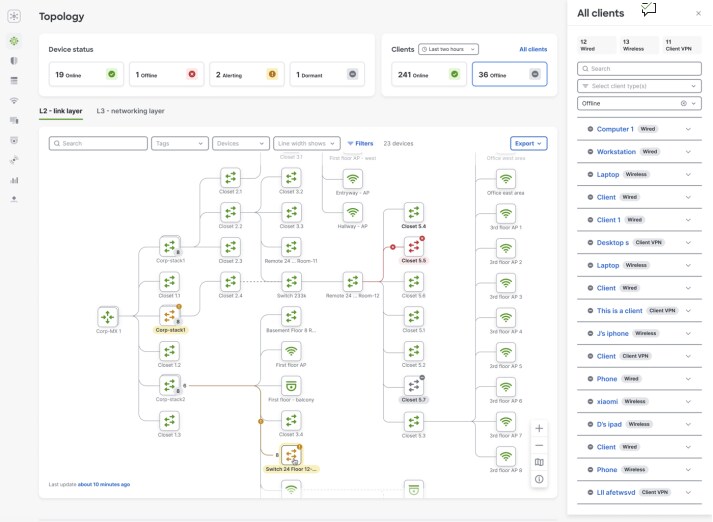
Once a Meraki switch is plugged into the network, users will automatically gain an intuitive, interactive topology map that provides unparalleled visibility and control for the entire network. With proactive alerts and powerful live tools like packet capture (PCAP), cable test, and cycle port, your team can effectively see everything and troubleshoot on one dashboard.

The refreshed topology map provides an integrated health overview, device details, and client details on a single page. This feature will be available in the Early Access program soon.

Learn what else you can power with the new MS130R

Discover how Meraki can securely power and connect your technology in challenging conditions and experience the peace of mind that centralized management and troubleshooting capabilities bring, even in remote locations. Visit our page to learn more about the new MS130 and MS130R switches or listen to our recent podcast episode.

The post Power Your Competitive Edge appeared first on The Meraki Blog.

Power Your Competitive Edge

On a sizzling summer night, you pull into a fast-food drive-through and are greeted by an automated voice that recognizes your past mobile app orders. The menu board surprises you with personalized recommendations, but what amazes you most is the next-level convenience. Instead of waiting at the window, you are directed to park in a designated area where they locate you and deliver your freshly prepared meal. This seamless customer experience sets the drive-through apart. You’ll definitely come back.

As you drive off, you wonder how they securely and reliably power and connect all their technology (cameras, Wi-Fi, and the digital menu board) in challenging outdoor conditions—whether it’s on a hot summer day, during a cold snowy winter, or on a menu board that needs to fit in a tight space. More importantly, how do their IT experts deploy new sites rapidly, manage firmware updates, and troubleshoot devices across thousands of locations globally?

The answer: extend seamless experiences with a cloud-managed ruggedized switch

Businesses need to power new customer and employee experience possibilities, regardless of industry. To achieve that, you can leverage IoT devices (like outdoor cameras) and Wi-Fi to ensure real-time communication, physical safety, intelligent analytics, and reliable operations in rugged environments. A cloud-managed ruggedized switch is ideal for managing network and security in one place across remote locations.

Meet the MS130R and extend connectivity and security to hot/cold/tight spaces. It is designed to:

  • Power more use cases with 30 W PoE+, IP30 protection, and support from -40 °C to 70 °C (-40 °F to 158°F)
  • Adapt to your installation needs with flexible mounting and power options
  • Connect outdoor access points, cameras, and other IoT devices in hot/cold/tight environments
  • Be used in locations such as parking lots, pop-up events, non-temperature-controlled spaces, outdoor kiosks, and hospitality venues like golf courses and ski resorts
  • Unleash operational efficiency and streamline remote management with the powerful and intuitive Meraki cloud-managed dashboard
  • Protect true edge environments by leveraging Adaptive Policy* with MS130R

The MS130R seamlessly extends common policies from campus to branch to harsh environments, helping you deliver secure networks that evolve with your organization and bolster growth

* MS130R is hardware-ready for the Adaptive Policy feature, with a future firmware upgrade and Advanced license.

Cross two hurdles in one leap: reduce costs and complexity with unified PoE power and network management.

Extending the power and connectivity to these environments is no easy feat.

By utilizing one single Ethernet cable for both power and network access, you not only simplify the installation process and lower costs, but also enable centralized monitoring and control for all relevant devices. The ability to remotely turn off ports and connected devices (like the menu board in the example) at a scheduled time is a great way to achieve sustainability and cost savings.

Peace of mind: manage and troubleshoot no matter how remote

When you deploy and manage end-to-end cloud-managed networks, from cameras to access points, switches, and security, it empowers your network team to manage effectively and unlock insights without adding operational complexity.

Once a Meraki switch is plugged into the network, users will automatically gain an intuitive, interactive topology map that provides unparalleled visibility and control for the entire network. With proactive alerts and powerful live tools like packet capture (PCAP), cable test, and cycle port, your team can effectively see everything and troubleshoot on one dashboard.

The refreshed topology map provides an integrated health overview, device details, and client details on a single page. This feature will be available in the Early Access program soon.

Learn what else you can power with the new MS130R

Discover how Meraki can securely power and connect your technology in challenging conditions and experience the peace of mind that centralized management and troubleshooting capabilities bring, even in remote locations. Visit our page to learn more about the new MS130 and MS130R switches or listen to our recent podcast episode.

The post Power Your Competitive Edge appeared first on The Meraki Blog.

Top